For residents of the Neshaminy Watershed
Many small actions across many homes can add up to a big change for the Neshaminy Creek. WatershedWork helps residents learn what’s happening in the watershed and take simple, practical steps to reduce stormwater runoff and pollution.
Why stormwater matters
When rain falls on forests and fields, much of it soaks into the ground. When it falls on roofs, driveways, and streets, it quickly runs off into storm drains and local streams.
In the Neshaminy Watershed, decades of development have increased the amount and speed of stormwater entering the creek. This can:
- Carry sediment, nutrients, and other pollutants
- Erode streambanks and damage property
- Reduce habitat quality for fish, wildlife, and plants
You don’t need to solve this alone. Small changes on individual properties, combined with municipal projects, can significantly reduce these impacts.
Simple ways to make your property more watershed-friendly
A watershed friendly property is one that reduces the volume of water leaving the property while ensuring that the water that does leave is as clean as possible. You don't need special training to get started. Here are a few examples of changes that help slow, spread, and soak in stormwater.
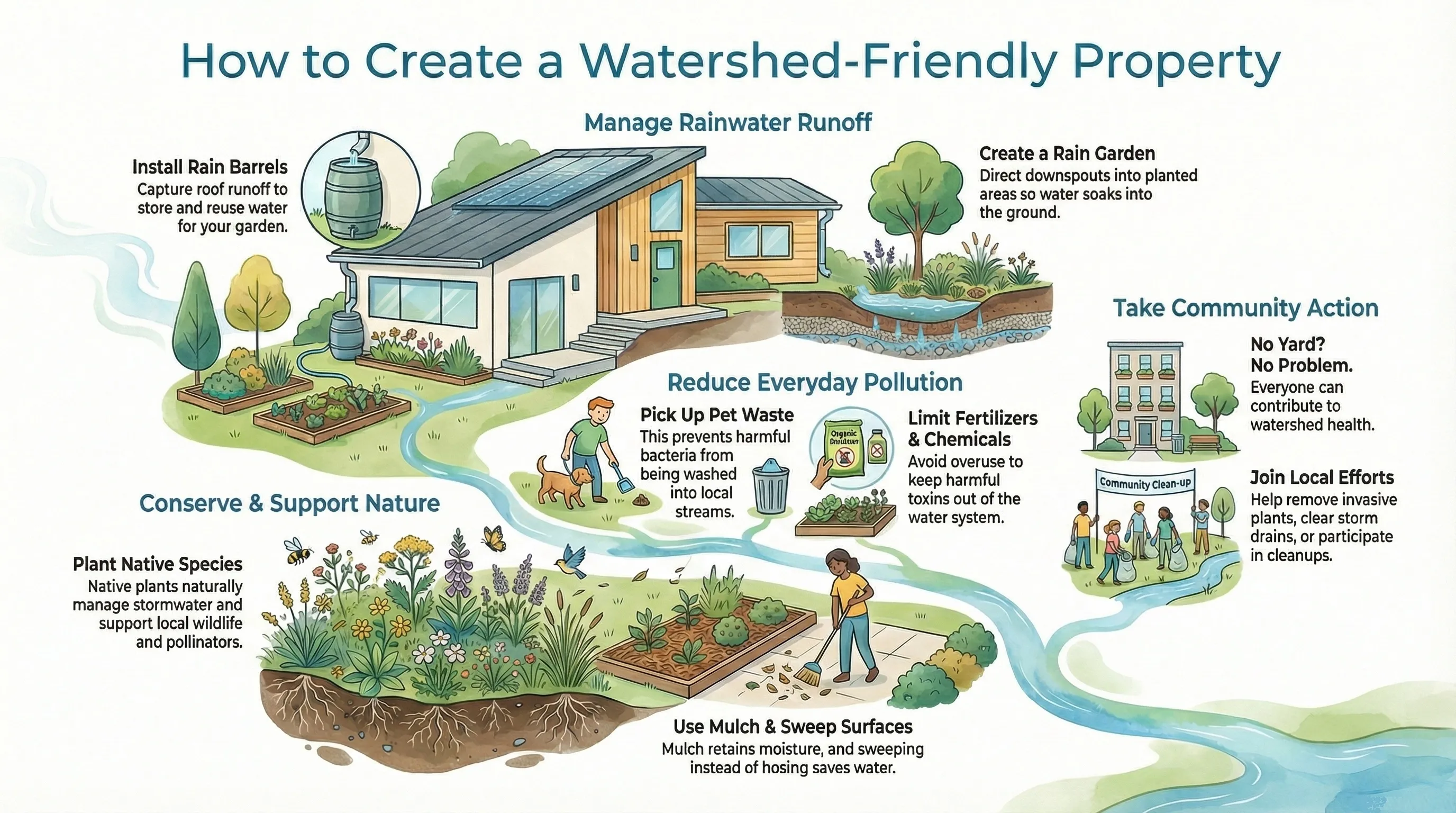
- Reducing Stormwater Runoff – Rain barrels & rain-friendly landscaping: Capture roof runoff with rain barrels and direct downspouts into planted areas or rain gardens so water soaks into the ground instead of rushing to storm drains.
- Reducing Water Pollution – Everyday pollution reduction: Pick up pet waste, avoid overusing fertilizers or chemicals, and keep litter and household toxins out of areas where rain can wash them into streams.
- Conserving Water – Water-wise planting & maintenance: Use native plants, mulch beds, sweep surfaces instead of hosing them, and use stored rainwater when possible to reduce treated water use.
- Supporting Wildlife – Plant-this-not-that: Swap invasive or ornamental plants for native species that hold soil, manage stormwater naturally, and support birds, pollinators, and other wildlife.
- Community Action – Neighborhood stewardship: Join efforts to remove invasives, plant native gardens, pick up litter, or clear storm drains—great options for residents without their own yard space.
Learn more and get support in the WatershedWork portal
You don’t have to figure this out on your own. The WatershedWork community portal offers:
- Step-by-step guides for home projects
- A calendar of workshops and volunteer events
- Opportunities to learn from local experts and neighbors
- Updates on projects happening around the watershed
Whether you participate once a year or more regularly, your involvement is welcome.
A place for every level of involvement
Some residents are ready to take on projects at home or volunteer regularly. Others may only be able to attend a workshop or help once a year.
WatershedWork is designed as a “big tent” — any level of participation helps. Start where you are, learn at your own pace, and take the next step when you’re ready.